

Have you ever noticed that artificial intelligence in marketing works quietly behind the scenes?
Remember the last time you browsed for a pair of shoes online, only to see ads for those exact shoes following you around the internet for days? Or when you visited a website and a helpful chat window popped up instantly, answering your question before you even had to type it? That’s exactly what we’re talking about here.. That wasn’t magic. It’s easy to think of AI as a far-off, futuristic concept..something out of a sci-fi movie. But the truth is, it’s already here, and it’s woven into the fabric of how we connect with customers online. For marketers and business owners, ignoring AI is no longer an option. It’s becoming the very tool that separates the brands that thrive from those that get left behind.
AI-powered tools transforming digital marketing strategies for businesses in the GCC
If you’ve been curious about how AI can fit into your strategy without replacing the human touch, you’re in the right place. This guide will walk you through everything you need to know, in plain English. We’ll explore what it is, why it matters, and how you can start using it to work smarter, not harder.
What Is Artificial Intelligence in Marketing?
Let’s cut through the jargon. At its core, artificial intelligence is simply a branch of computer science focused on building machines that can perform tasks that typically require human intelligence. This includes things like learning, problem-solving, recognizing patterns, and making decisions.
So, what does that mean for marketing?
Artificial intelligence in marketing is the use of these smart technologies to analyze data, automate processes, and personalize customer interactions at a scale that humans simply can’t manage alone. It’s not about cold, robotic replacements. Think of it more like giving your marketing team a super-powered assistant..one that never sleeps, can crunch millions of data points in seconds, and provides insights you might have otherwise missed.
This “assistant” helps you understand your audience on a deeper level, predict what they might want next, and deliver the right message to the right person at the perfect moment. It’s the brainpower behind the scenes making your campaigns more efficient and effective.
Why Are Businesses Embracing AI Today?
Because the pressure to stay relevant has never been greater..and AI offers the lifeline we’ve all been searching for. It’s not just about keeping up with competitors; it’s about surviving in a digital landscape that’s changing faster than most of us can adapt. AI cuts through the noise, delivering clarity from chaos and turning overwhelming data into actionable insights that just make sense. It speaks directly to today’s customers who expect personalized experiences that feel like they were crafted just for them..because they were. This isn’t just a technological shift; it’s the key to building deeper, more meaningful connections in a world that’s craving authenticity.
The Overwhelming Data Deluge
We’re all drowning in information. Every click, like, share, and purchase generates data..more than any human team could ever process. AI doesn’t just manage this data; it thrives on it, transforming what feels like chaos into clear, actionable intelligence that drives smarter decisions.
Sky-High Customer Expectations
Today’s customers don’t just want personalization..they expect it. They want to feel known, understood, and valued. AI makes it possible to meet these expectations at scale, delivering experiences that feel personal and relevant, even when you’re reaching thousands.
The Need for Real Efficiency
Let’s be honest: marketers are tired of spending hours on repetitive tasks. AI handles the grind..segmenting lists, testing campaigns, scheduling posts..freeing up time for the creative, strategic work that really moves the needle.
Staying Competitive
This isn’t just an option anymore. AI is becoming the dividing line between brands that thrive and those that get left behind. Embracing AI means future-proofing your strategy and showing your audience that you’re innovating with them in mind.
The Benefits of Using AI in Digital Marketing
The reasons for using AI sound great in theory, but what are the actual payoffs? The benefits are transformative, touching nearly every aspect of modern marketing.
- Hyper-Personalization at Scale: This is the big one. AI can analyze a user’s behavior, past purchases, and demographic data to create unique experiences for each individual. Think of Netflix recommending your next show or Spotify creating your “Discover Weekly” playlist. That level of one-on-one marketing builds incredible customer loyalty.
- Deeper Customer Insights: AI doesn’t just report data; it interprets it. It can identify hidden patterns and trends in customer behavior, telling you not just what your customers are doing, but why they might be doing it. These insights allow you to anticipate needs and innovate ahead of demand.
- Improved Return on Investment (ROI): By optimizing ad spend, improving targeting, and increasing conversion rates, AI directly boosts your bottom line. You waste less money shouting into the void and spend more on engaging in meaningful conversations with people who are likely to buy.
- Enhanced Efficiency and Productivity: Automating routine tasks is a massive win for any team. Whether it’s generating reports, tagging and organizing content, or managing basic customer queries through chatbots, AI handles the grunt work. This allows your team to dedicate their energy to high-level, strategic projects that drive growth.
- Round-the-Clock Customer Engagement: AI-powered chatbots and virtual assistants provide instant, 24/7 support. They can answer FAQs, qualify leads, and even help with purchases, ensuring your business is always there for your customers, no matter the time zone or hour.
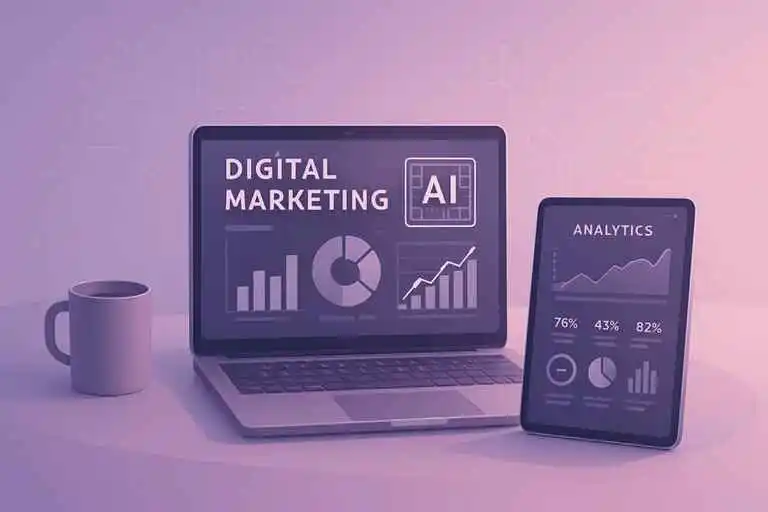
AI transforms marketing through personalization, efficiency, and deeper customer insights
The Key Applications of AI in Digital Marketing
Okay, so how is this actually put into practice? Let’s break down some of the most powerful ways AI is being used right now.
Chatbots and Virtual Assistants
Gone are the days of clunky, frustrating chatbots that could only answer three questions. Today’s AI-powered chatbots are sophisticated, conversational, and incredibly helpful. They use Natural Language Processing (NLP) to understand the intent behind a customer’s message and respond in a natural, helpful way.
They can handle everything from tracking an order to booking an appointment, instantly. This not only improves the customer experience by providing immediate answers but also frees up your human support team to handle more complex and sensitive issues. It’s a win-win.
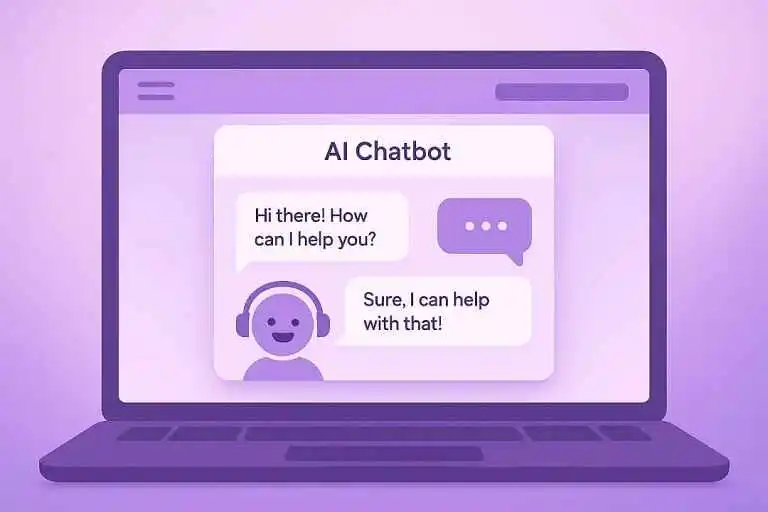
Modern AI chatbots provide 24/7 customer service and support
Predictive Analytics for Consumer Behavior
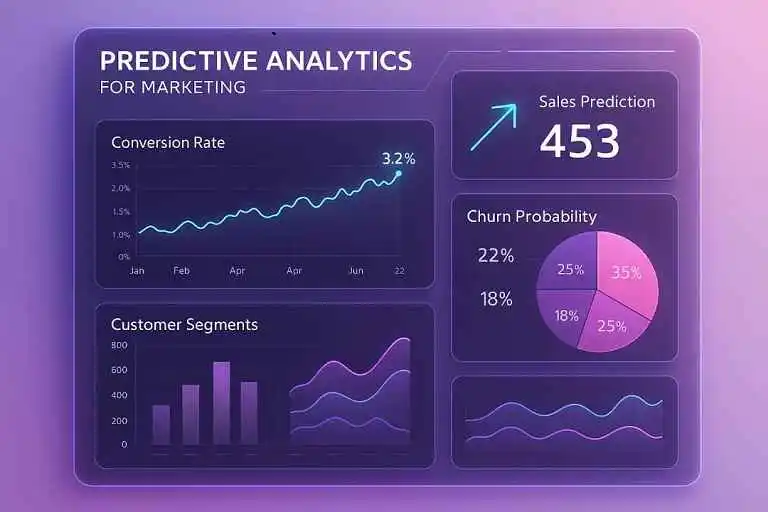
This is like having a crystal ball for your marketing strategy. Predictive analytics uses AI to analyze historical data and identify patterns to forecast future outcomes.
For marketers, this means being able to predict things like:
- Which leads are most likely to become customers (lead scoring)
- Which customers are at risk of churning (so you can win them back)
- What products a customer might be interested in next
This allows for incredibly precise targeting and proactive marketing, ensuring you’re always one step ahead of your customer’s needs. For a deeper dive, check out our guide on getting started with predictive analytics.
AI-Powered Content Creation
Let’s be clear: AI is not going to replace talented content writers. But it is an amazing tool for augmenting and accelerating the content creation process.
AI tools can help you:
- Generate ideas: Beat writer’s block by suggesting topics and headlines based on popular trends and keywords
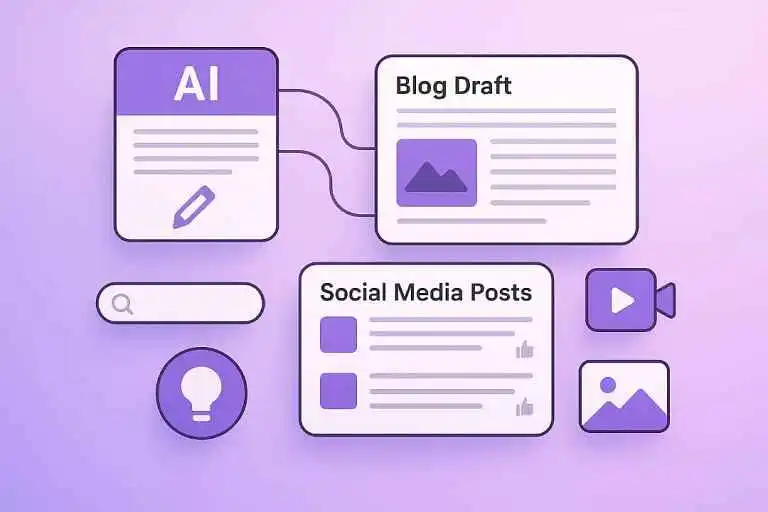
- Write drafts: Create short-form content like social media posts, product descriptions, or email subject lines
- Edit and optimize: Check grammar, adjust tone for readability, and even suggest SEO improvements
It’s like having a brainstorming partner and an editor rolled into one. The human touch is still essential for strategy, storytelling, and adding unique brand voice, but AI can handle the heavy lifting. For more on this, explore our guide to AI tools for content creation.
AI content tools help marketers create better content faster
Programmatic Advertising and Automation
If you’ve ever run a manual online ad campaign, you know how time-consuming it can be. Programmatic advertising uses AI to automate the buying and placement of ads in real-time.
Here’s how it works: When a user visits a website, an automated auction happens in milliseconds. AI algorithms representing advertisers bid on that ad space based on how well the user matches their target audience. The winner gets their ad placed instantly. This ensures your ads are shown to the most relevant people, at the optimal time, on the best websites, maximizing your ad spend efficiency.
Real-World Case Studies of AI in Action
Seeing real-world examples really brings the power of AI to life.
- Spotify: The music streaming giant is a master of personalization. Its AI engine analyzes billions of data points on listening habits to create incredibly tailored user experiences like the “Discover Weekly” and “Daily Mix” playlists. This keeps users engaged and subscribed, reducing churn and building a fiercely loyal community.
- Netflix: It’s estimated that AI-driven recommendations influence about 80% of what people watch on Netflix. By analyzing viewing history, time of day, and even how long you hover over a title, their algorithm serves up hyper-personalized suggestions that keep subscribers binge-watching and reduces cancellation rates.
- Sephora: The beauty retailer uses AI in multiple ways. Their chatbot on Facebook Messenger offers product recommendations and allows users to try on makeup virtually using augmented reality. This fun, interactive experience drives sales and engagement, bridging the gap between online and in-store shopping. For those interested in e-commerce applications, see our e-commerce store ideas guide.
Companies like Spotify and Netflix use AI to deliver personalized experiences
What Does the Future Hold for AI in Digital Marketing?
AI isn’t standing still. It’s evolving rapidly, and the future holds even more exciting possibilities. Here’s what’s on the horizon:
- The Rise of Voice and Visual Search: As smart speakers and image recognition become more prevalent, optimizing for “Hey Google” or a Pinterest lens search will become crucial. AI will be key in understanding the intent behind these conversational and visual queries.
- Hyper-Advanced Customer Segmentation: AI will move beyond basic demographics to create micro-segments based on real-time behavior, emotion, and context, allowing for mind-bogglingly precise marketing.
- AI-Driven Content Curation: Beyond creation, AI will get better at dynamically assembling and personalizing content experiences in real-time for each user, making every website visit truly unique.
- Ethical and Privacy-Focused AI: As data privacy concerns grow, the future will belong to AI tools that can deliver personalization without being intrusive, finding the perfect balance between relevance and respect. Learn from past tech failures to avoid similar pitfalls.
Staying informed on these emerging AI marketing trends will be essential for any business that wants to remain competitive.

The future of AI in marketing includes voice search, advanced segmentation, and ethical AI
Frequently Asked Questions About AI in Digital Marketing
How is AI used in digital marketing?
AI is used in digital marketing to analyze data, automate processes, personalize customer experiences, optimize advertising, create content, and provide customer service through chatbots. It helps marketers work more efficiently and effectively.
Will AI replace digital marketers?
No, AI will not replace digital marketers. Instead, it will augment their capabilities, handling repetitive tasks and data analysis so marketers can focus on strategy, creativity, and building genuine human connections.
What are the benefits of AI in marketing?
The key benefits include hyper-personalization at scale, deeper customer insights, improved ROI, enhanced efficiency and productivity, and round-the-clock customer engagement.
How can small businesses use AI in marketing?
Small businesses can use AI through affordable tools for chatbots, email marketing automation, content creation, social media management, and analytics. Many platforms offer AI features at various price points.
What are the ethical considerations of AI in marketing?
Key ethical considerations include data privacy, transparency about AI use, avoiding bias in algorithms, and ensuring AI complements rather than replaces human relationships with customers.
Conclusion
Artificial intelligence in digital marketing isn’t a distant future concept..it’s a present-day reality that’s reshaping the landscape. It’s a powerful partner that handles data-heavy lifting and automation, allowing us as marketers to focus on what we do best: creativity, strategy, and forging genuine human connections.
From the chatbots that answer customer questions at midnight to the algorithms that know our audience better than we sometimes know ourselves, AI is here to make our efforts more intelligent, efficient, and effective. The businesses that embrace this change, that learn to work alongside this technology, will be the ones that define the next decade of digital marketing.
The question isn’t if you should start incorporating AI into your strategy, but how soon you can get started.
Contact us today for a personalized AI marketing consultation
Additional Resources
To learn more about AI in digital marketing, explore these additional resources:

